

March Market Wrap – Tough month across the board
March definitely kept investors on their toes. Broadly speaking, it was a tough month across the board—equities sold off, yields moved higher, and volatility picked up. Emerging markets led the downside, falling 13%, while the S&P 500 and Nasdaq each declined close to 5%, marking their weakest monthly showing since September 2022.
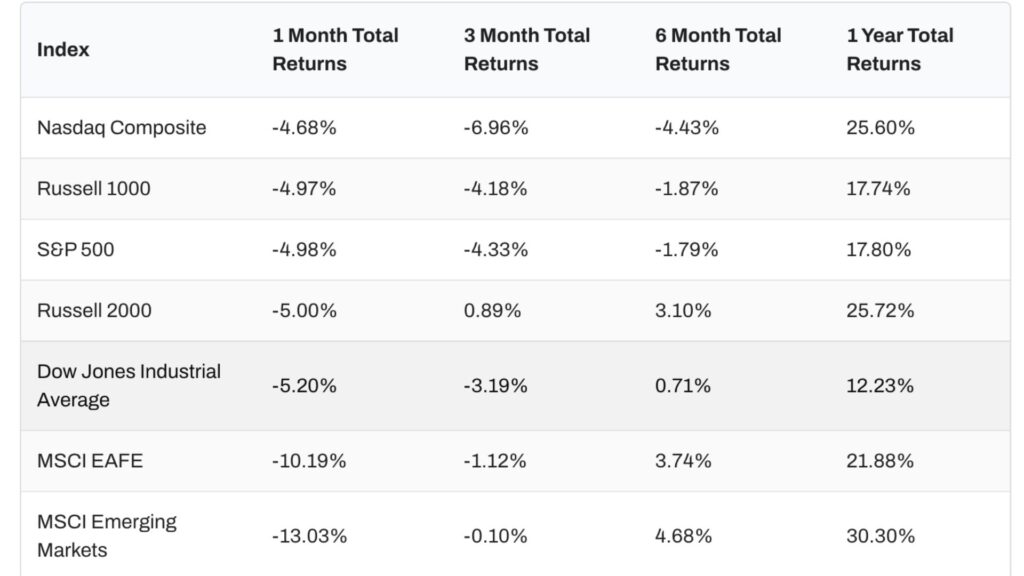
From a sector perspective, it was nearly all red—with one major exception: energy. The sector gained over 10% for the second consecutive month, fueled by a sharp spike in oil prices following U.S. strikes on Iran. That geopolitical shock quickly translated into supply concerns, and markets responded accordingly.
Oil was the headline story. Brent crude surged more than 70% in March, breaking above $100 per barrel for the first time since 2022. That’s not just a strong move—it’s historically significant. Even during the early stages of the Gulf War, oil didn’t climb that aggressively.
On the macro front, the data painted a mixed but slightly concerning picture. The labor market showed signs of softening, with nonfarm payrolls unexpectedly declining by 92,000 and unemployment edging up to 4.4%. Inflation, however, remains steady—holding at 2.4% headline and 2.5% core—which continues to justify the Fed’s patient stance. Markets are currently pricing in almost no chance of a rate cut at the upcoming April meeting.
That backdrop pushed Treasury yields higher across most of the curve, with the 3-year seeing the largest jump. Rising yields combined with geopolitical uncertainty created a challenging environment for equities throughout the month.
Commodities delivered a mixed performance. While oil surged, precious metals pulled back meaningfully—gold fell 11% and silver dropped nearly 20%, giving back part of their strong prior gains. Meanwhile, cryptocurrencies quietly stabilized, with both Bitcoin and Ethereum posting modest gains and breaking a multi-month losing streak.
Interestingly, the month didn’t end entirely on a sour note. On the final trading day of the quarter, markets rallied sharply on signs of potential de-escalation between the U.S. and Iran—resulting in one of the strongest end-of-quarter sessions on record.
Market Outlook – Driven by geopolitical developments
The current period is a textbook example of how markets react to geopolitical shocks—sharp initial moves, especially in commodities like oil, followed by broader ripple effects across equities and rates. While the headlines feel significant (and they are), history consistently shows that staying disciplined through periods like this tends to be more rewarding than reacting to short-term volatility.
For now, the key variables to watch are clear: oil prices, interest rates, and labor market trends. But as always, maintaining a long-term perspective remains the most important strategy.