
November Market Wrap — Healthcare Breaks Out While Rate-Cut Optimism Persists
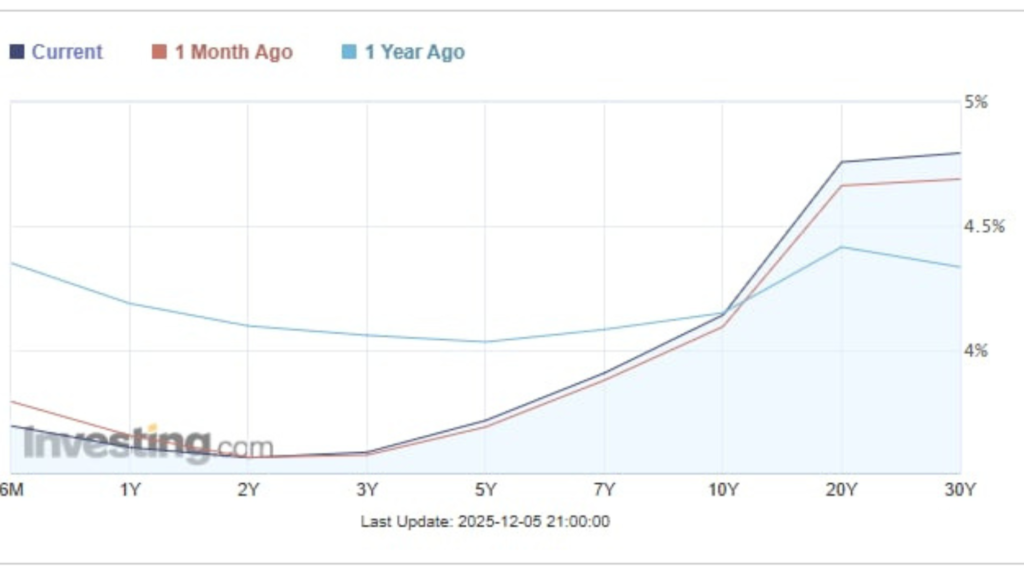
Markets spent most of November moving sideways, with plenty of intramonth noise but not much direction. The S&P 500 managed to eke out a 0.2% gain, while emerging markets stumbled, finishing down 2.4%. The Nasdaq also pulled back 1.4%, giving back some of its recent momentum.
On the sector front, Healthcare was the standout, surging 9.3% as investors rotated into more defensive, cash-flow-solid names. Tech, on the other hand, lagged, sliding 4.8%—largely thanks to Nvidia soaking up all the oxygen. Even with an impressive Q3 print, the stock (and broader AI trade) cooled as investors grew nervous about whether we’re nearing an AI mini-bubble.
Meanwhile, Communication Services, Real Estate, and Financials all posted solid gains, helping offset some of the drag from mega-cap tech. And with key economic releases delayed, markets continued trading under the assumption that rate cuts are still on the table heading into year-end.
Fixed Income & Treasury Yields
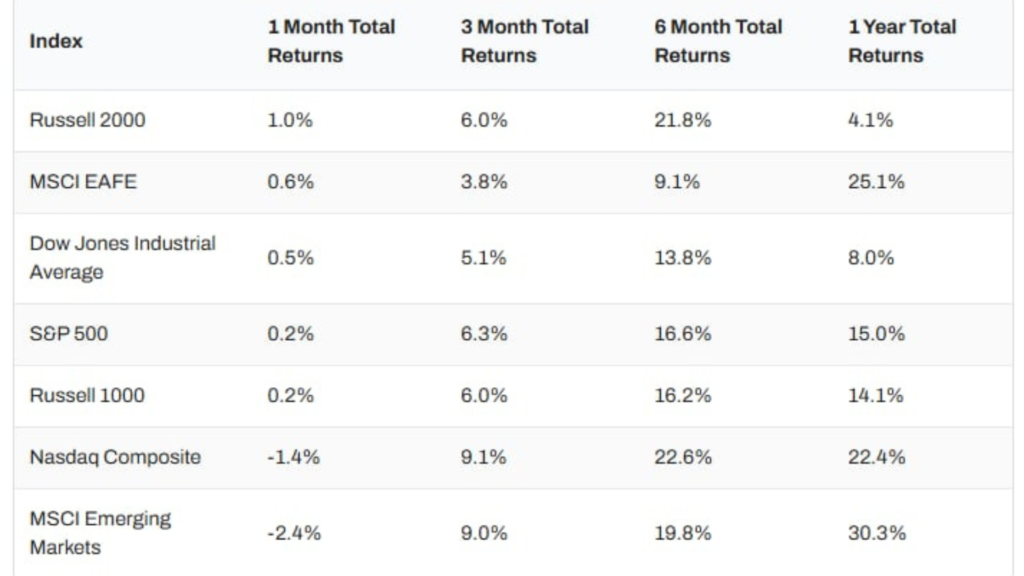
Compared with one year ago, the yield curve has steepened meaningfully with clear implications for both stock and bond investors.
For stock investors, a steepening curve often signals that recession fears are easing and that markets expect stronger future growth. When long-term yields rise relative to short-term rates, it typically reflects improving confidence in the economic outlook.
That environment tends to benefit cyclicals (industrials, financials, consumer discretionary) and value-oriented sectors, especially banks, which earn more from lending when the curve steepens. On the flip side, growth and tech stocks may feel some pressure, since rising long-term yields can weigh on valuations by increasing discount rates. In short: steepening is generally constructive for equities, but leadership tends to rotate.
For bond investors, a steepening curve usually means two things:
- Short-term rates are falling (often due to Fed cuts), which boosts returns on the front end and improves bond prices.
- Long-term yields are rising, which increases income opportunities but temporarily pushes down prices of longer-duration bonds.
For investors, that means duration risk becomes more noticeable, but the forward-looking income profile improves. Many treat a steepening curve as a chance to gradually extend duration, lock in higher yields, and position for future rate stabilization. Credit markets also tend to perform better when the curve steepens, since it reflects a healthier macro backdrop.
Macro Update: Data Gaps, Rate-Cut Expectations, and Market Crosscurrents
The government’s decision to cancel several key October economic releases has left investors flying with less visibility than usual. Still, the latest September nonfarm payrolls surprised to the upside, even as the unemployment rate ticked up slightly. With limited fresh data to work from, all eyes now turn to the December 10 FOMC meeting, where markets are pricing in a third straight 25 bp rate cut. Even without the full macro picture, markets appear comfortable pricing in a year-end rate reduction.
Crypto and Commodities
It was a brutal month for digital assets. Bitcoin fell 17.5%, dropping below $100,000 for the first time since May and erasing all of its gains for the year—now down over 2% YTD.
Ethereum fared even worse, sliding 22.2% in November after a weak October. Despite a blockbuster summer, ETH is now down 11% YTD, reminding investors just how quickly sentiment can flip in crypto markets.
Gold bounced back sharply, rising 6.2% in November after a volatile October. Oil moved in the opposite direction—Brent crude slid 0.9% to $64.83, while WTI dropped 4.3% to $59.11, reflecting softer demand expectations and ample supply conditions.
Market Outlook
Markets head into year-end navigating a strange mix of optimism and uncertainty. Rate-cut expectations remain firmly embedded—markets are pricing in a third consecutive 25 bps cut—and that backdrop has helped stabilize sentiment even as pockets of volatility persist. If the Fed follows through, financial conditions should ease further, supporting risk assets and helping extend the recovery in rate-sensitive areas like real estate and small caps.
At the same time, investors should brace for uneven market leadership. Technology has begun to show signs of fatigue, while defensive and cash-flow-rich sectors like healthcare are gaining traction. Bond yields drifting lower across most of the curve are giving both equities and credit a bit more breathing room, though a messy macro picture means sentiment could swing quickly.
Overall, the setup for early next year looks constructive—but selective—where disciplined positioning and attention to sector rotation may matter more than broad beta exposure.